Metaphors are “pervasive in everyday life, not just in language but in thought and action. Our ordinary conceptual system… is fundamentally metaphorical in nature” (Lakoff & Johnson, 2003, p. 3). Yet what part might fiction itself play toward healing a person bereaved? Even a constructivist psychological approach to loss might hesitate at outright ghost stories, perhaps uniquely delicate as bibliotherapy for anyone recently intimate with dying and the dead. From folk belief to organized religion, from idiosyncratic superstition to sworn first-hand experience, notions of ghosts or spirits are certainly complicated beyond their Halloween caricatures. If cave paintings or Greek drama already suggest the intimate evolution of religion with art, distinctions no less blurry in the history of literature, ghost stories capture precisely where metaphor and metaphysics meet. Lincoln in the Bardo is a Booker Prize winning novel deeply entangled in such layers of premise and suggestion, a masterpiece ghost story not just on themes of grief and loss, but as a meta-meditation on the potent transpersonal power of perspective taking. The novel’s strong Buddhist influences support these themes well, Neimeyer and Young-Eisendrath citing a wide body of research suggesting numerous ways that “Buddhist principles and practices carry clear relevance for treating bereavement”, recognizing that “a deep awareness of the universal (and nonpersonal or transpersonal) nature of the impermanence of life and its imperfections will open a new perspective on what human life is about in its challenge to create meaning in the midst of change” (2015, p. 264). With full fictional abandon, Lincoln in the Bardo not only explores ‘the universal nature of the impermanence of life and its imperfections’ but also makes ‘opening to other perspectives’ a crucial theme itself– its ghosts “occupying” the points of view of others to make of them an allegory richly reflexive, opening liminal space between the living and the dead, words and truth, selfhood and empathy.
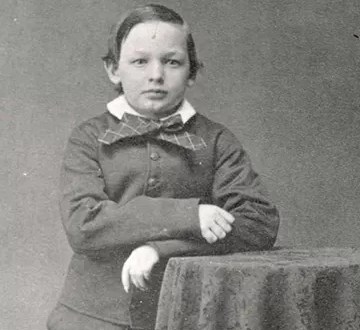
Published in 2017 and written by George Saunders, whose Wikipedia bio (2024) shares cursory description of him as “a student of Nyingma Buddhism”, the novel’s Tibetan Buddhist influence is explicitly proclaimed only by the “bardo” of its title. Indeed, as appropriate to its American Civil War setting, most characters of the book are Christian, making explicit religious sense of their situations only in Christian terms. If Dante had been reborn as both American and Buddhist, however; if The Tibetan Book of the Dead itself were adapted as a ghost story, employing very liberal and playful poetic license to capture an archetypal journey through the afterlife—Saunders’s novel is just so creative. With hagiographic attention not upon the Buddha but upon Abraham Lincoln, especially over a single night in the 1860s, in the early middle of the war, it explores the effect upon Lincoln and others of his young son Willie’s death, by typhoid fever. While the primary setting is the graveyard where Willie has been interred, the story is told through a post-postmodern assembly of citations, a textual textile of astonishingly myriad points of view quilted from snippets of letters, newspapers, memoirs, logbooks and other historical records, real and fictionalized, along with voices of characters present to the events, living and dead. The novel’s central suggestion is that Lincoln’s experience in returning to Willie’s tomb the night following his funeral– not only to interact physically with the body of his son, but also, unbeknownst to him, with his son Willie’s spirit, as well as countless other spirits there, likewise not yet at rest– leads to all parties influencing each other intimately, including the inspiration of Lincoln’s greater empathy towards black folks and accompanying resolve to carry on and win the war. Saunders’s touching book is an Indra’s net, a hall of mirrors both in point of view and theme– reflections on suffering, attachment, avoidance and perspective taking, as well as the multiple meanings of admission and freedom.
Bardo (Tibetan)
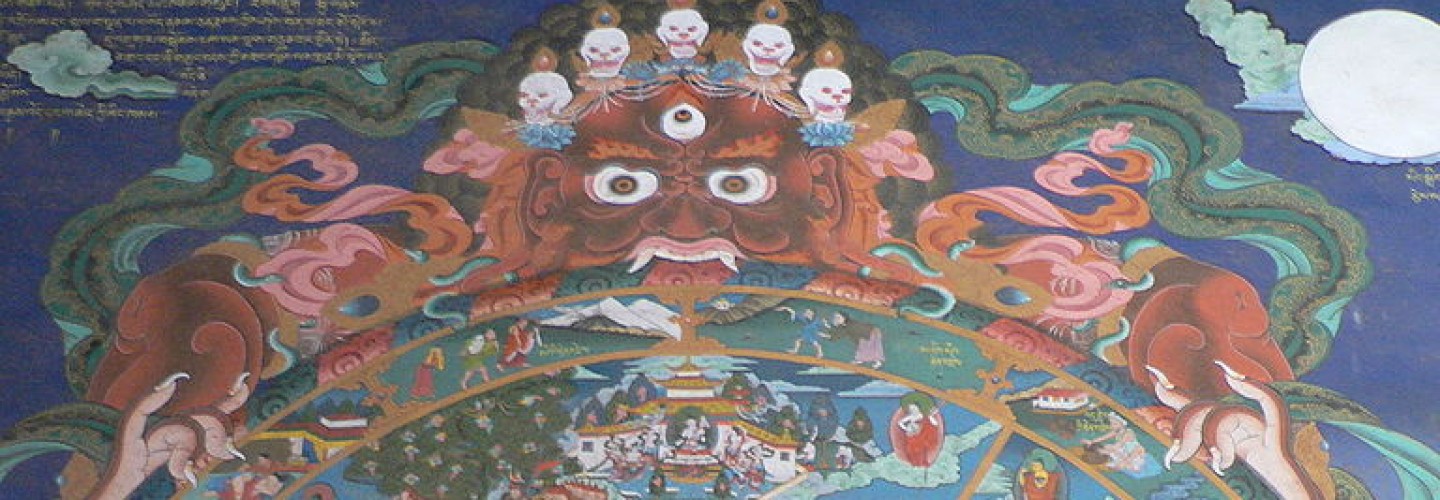
“By definition, any new state of being involves a break with– a loss of– the past” (McCoyd et al., 2021, p. 2), and of course no break with the past, no change in one’s state, could appear more unequivocal than death. Grief is defined by Parkes as an experience of such loss, but accompanied by the essential component of “a reaction of intense pining or yearning for the object lost (separation anxiety)” (2009, p. 30). Despite this, Parkes is unsatisfied to call the processing of such experience ‘grief work’, seeing better the re-learning that must occur following loss as “the work of transition” (2009, p. 32). Change, transition, impermanence is perhaps the most fundamental emphasis of Buddhism, too. The Tibetan word used by Saunders for his novel’s title emphasizes a metaphor further suggestive for this orientation. Correcting the persistent misnomer of The Tibetan Book of the Dead’s first translation into English, Buddhist scholar Robert Thurman re-names Bardo thos grol chen mo, the most renowned of Tibetan Nyingma texts first revealed in the 14th century, as The Great Book of Natural Liberation Through Understanding in the Between (1994), the word ‘bardo’ taken to mean a sentient being’s intermediate state of passage between death and rebirth. It also is used elsewhere in this guidebook for the dead, however– to describe other existential transitions, others formally enumerated even within this given period between death and rebirth– ‘bardo’ most simply meaning “between-state” (Thurman, 1994, p. xx). A bardo therefore means any potent liminal space, even in the ambiguous meaning of Saunders’s title. Does Lincoln in the Bardo refer especially to young Willie, for example, caught in that most popular bardo of Tibetan Buddhism, this intermediate, disembodied state between death in one life and rebirth in another? Or does it refer any less to that of his more famous father still living, Honest Abe, caught cognitively, emotionally, even morally, between indecision and resolve about the war; between attachment to his son and admission of his death; between his assumptive world and the ultimate truth of universal suffering?
Attachment
“Bardos only exist in samsara, which is defined by grasping and attachment” (Holecek, 2013, p. 69). Lincoln, Willie, and indeed each and every one of the novel’s characters, including others very richly developed as central, all share this particular bardo– of being caught between their attachments and the truth. Samsara refers to Buddhist cosmology’s karmic cycle of innumerable rebirths over countless eons that is precisely owing to each our clinging and aversion as sentient beings (Harvey, 1990), so ‘attachment’ here, despite its shared psychological context, is not only the definition given by Bowlby or Ainsworth, for example; nor is it even quite relevant to the relationship between attachment styles and grief as explored still further by Parkes (2009). While Willie’s mother is given no voice of her own in the novel, Saunders echoing emphatically Mary Lincoln’s own mute grief, claimed even by historical record to have kept her from attending her son’s funeral and debilitating her for the rest of her life, the novel privileges the attachments between mothers and their children in numerous remarkable ways, and the book’s characterization of the boy, his father, and their own extremely fond, mutually well-adjusted attachments are all touchingly emphasized. Parkes states, especially in weighing Rando’s attention to the ways that secure attachment may lead nevertheless to difficulties facing loss that are as potentially challenging as those with anxious, avoidant, or even disorganized attachments, “if our experience teaches us that [disasters] happen to other people, they do not happen to me, then we will adopt this basic assumption and feel secure” (2009, p. 146). Regardless of attachment style, none of us escapes disastrous loss, none of us escapes death. While Bowlby may claim definition of the word ‘attachment’ in its primal, physical and thereby more literal sense, Buddhism uses the term not only of infants to their mothers, not only of adults to their romantic partners, not even of Harlow’s poor monkeys to their lifeless maternal surrogates. Attachment is understood as equally salient in a much broader, also metaphorical sense: sentient beings cling to countless assumptions of security, all equally and inherently unstable as interdependent and impermanent, attachment the very root cause of all suffering.
For Buddhism, the “pining” in grief described by Parkes is as definitive for such attachment as anything emphasized by Bowlby, and especially salient is Parkes’s concept of ‘the assumptive world’, the internal mental model that we “take for granted” and that is “assumed to be true” (2009, p. 31). Parkes indeed emphasizes here that our assumptive world is never fixed and requires constant modification. How to imagine, however– even as outright fiction– the modification required of one’s assumptive world in grief not ‘just’ over a loss; not just over a death; but over the loss, the death, of one’s self? Parkes’s fascinating research comparing bereaved people to those who have lost limbs leads even him to a different explanation than offered by ‘attachment theory’, since “I do not love my left leg in the same way that I love my wife” (2009, pp. 30-31). Yet he recognizes “striking similarities” in these otherwise distinct reactions to loss: “Most amputees, like bereaved people, found it hard to believe what had happened. They were preoccupied with and pining for all that they had lost and, most strikingly, they had a strong sense of the presence of the lost part” (2009, p. 30). While Parkes appears sensitive never to employ the term ‘ghost limb’, what are the multiple implications, ironic or otherwise, of his choice of words describing how, “[w]ithout [our assumptive world] we are literally lost” (2009, p. 31)? Whether ‘lost’ is meant as ‘no longer possessed’, or more likely as ‘bewildered, wandering astray’– like a ghost– the verb ‘to be’ equating loss of our assumptive world to loss of ourself is indeed constructivist, even remarkably Buddhist, and could only be more this latter by recommending the soteriological freedom to be found in admission and deconstruction of this ‘assumptive self’. The most harrowing experiential revelation of one’s assumptive world– one’s own death– is not only approached as therefore a precious opportunity for spiritual development in the religious text Bardo thos grol chen mo, but also is what Saunders’s novel illustrates so creatively in example after example, character after character– each maintaining ‘a strong sense of presence of the lost part’, each a case study of how a particular person’s own death might lead to an upending bardo-state of unprecedented disbelief, separation anxiety, and pining attachment.
Buddhist cosmology describes samsara as six possible realms of rebirth, animals and humans being two, life as a human considered most precious for being the only realm where one can accomplish full liberation from suffering. Another of these realms, however, the peta (Pali), includes so-called ‘hungry ghosts’. Thurman takes issue with common translation of this term, too (1994)– the image having been similarly seized upon outside of Buddhism, a metaphor for addiction by the likes of Gabor Maté, for example (2021)– but Harvey describes these as subtle, without a physical body, indeed “frustrated ghostly beings who frequent the human world due to their strong earthly attachments, not unlike the ghosts of Western literature” (1990, p. 33). Once again, Saunders himself side-steps any pretense to orthodox, ‘literal’ Tibetan Buddhism, never offering narrative point of view that even explicitly describes these characters as ‘ghosts’ or ‘spirits’, either. Much as Harvey shares of beings reborn to the hell realm in karmic forms “appropriate to the deeds which led to them” (1990, p. 34), however, or of one type of hungry ghost “portrayed as having a huge stomach, racked by hunger, and a tiny neck that allows little substance to pass” (p. 33), Saunders imagines his own characters in the bardo, who despite their cognitive avoidance, have morphing bodies that manifest grotesquely, even cartoonishly their outward appearances as irrepressible projections of their particular personal attachments. The novel opens with the account of Hans Vollman, for example, a central character who describes convincingly his marriage to a much younger woman as kind, compassionate, moral, but whose precise moment about to finally and gloriously consummate this love was interrupted by a collapsed ceiling beam, striking him on the head. In the bardo, frustrated by “deferral” of this long anticipated pleasure and resulting “disability”, Vollman appears to others as he may have at this exact moment of his demise– not just with an “awful dent in his head”, but also with a comically exaggerated erection, his massive “member swollen” and “bouncing” (2017, p. 28). Such an appearance might illustrate directly the teaching of Tibetan Buddhist lama Sogyal Rimpoche, who emphasizes that “the last thought and emotion that we have before we die has an extremely powerful determining effect on our immediate future” (2002, p. 228). Bevins is another major character whose sensual attachments continue to manifest, despite his being dead, in ghostly forms of his dissociation. Bevins appears as having several sets of eyes, “like grapes on a vine”, “darting to and fro”, as well as several noses, all sniffing, and several sets of hands; he introduces his predicament by explaining that “Mother will not be pleased” at the mess he has made, his story’s descriptive details suggesting quite clearly– to all willing to admit, at least– that he has killed himself, revealed later to be his agonized impulse following romantic betrayal by his first and only lover, another man (2017, p. 27). “Having come so close to losing everything”, Bevins insists, he’s resolved now “to go outside, into that beautiful world, a new and more courageous man, and begin to live”, this thought inspiring his indulgence in rambling Faulkneresque illustration after illustration of life’s sensual pleasures, simmering into a breathless boil that is finally interrupted, as always in this repeating dynamic, by Vollman. Despite Bevins’s dear friend’s gentle admonishment to “take a breath” (p. 26), Willie tells us, “In telling his story he had grown so many extra eyes and noses and hands that his body all but vanished”– “slashes on every one of the wrists” (Saunders, 2017, p. 27).
Saunders and Buddhism both suggest that our greatest attachments are sensual, that “[t]he painful bardo of dying is painful because it hurts to let go”, says Buddhist teacher Holecek; “[w]e can choose to let go now, and die before we die, easing our transition. Or we can wait and be forced to let go during death, which often results in a bumpy ride” (2013, p. 68). Disbelief and denial, especially in imagining a loss as traumatic as one’s own death, would appear natural forms of resistance to that force, represented by Saunders over and over, including use of standard euphemisms that are offered by Bevins and Vollman to finish each other’s sentences and avoid awkward reality: a coffin called a “sick-box”, for example; a grave, a “sick-hole”; their graveyard, their “hospital-yard”; a corpse, a “sick-form” (p. 58). Even on this side of the afterlife, even this side of any belief in one, grief’s ride can be plenty bumpy enough, but suggestion of denial brings to mind Kübler-Ross, whose now pop-cultured stages of grief were originally developed to describe the processing not of another’s death but of one’s own (McCoyd et al., 2021), just as the case for these characters. McCoyd et al. explain that Kübler-Ross first conceived her ‘denial stage’ not as an unhealthy adaptation in this context, but as a “protective” period of adjustment for terminal patients understandably searching for accuracy and second opinion in their diagnosis, and that it has been “widely misinterpreted and misapplied in grief counseling”, often “viewed as a stage to be ‘broken through’ or confronted, with counselors often applying Draconian methods to ensure that denial is not maintained” (2021, p. 15). While representing better this altered definition of denial as eventually needing to be broken through, Saunders’s bardo could just as well be characterized as some blend of these terms– a period of adjustment to the utter upending of one’s assumptive world, but these journeys indeed culminating, with warm compassion, in quite epiphanous transformation. The use of euphemisms, different for these characters only in their idiosyncrasy from those common for us, the contemporary living (‘to pass away’, etc), is only one of Saunders’s earliest hints at the part that language might play in such denial; Bevins’s descriptions of pleasures in “that previous place” too, as he and Vollman also put it euphemistically, are so passionately poetic– language demonstrated an enticing sensual attachment itself.
Even with enthusiastic acceptance of ‘bardo’ as an illuminating term to use at least metaphorically to describe the liminal spaces of loss, ‘denial’ remains not quite so precise a word to capture what keeps people suspended there, in the novel or elsewhere. A third major character, for example, companion to Vollman and Bevins, is Reverend Thomas, who is wholly self-aware that he is dead; what holds him back is rather his dread anticipating that he is fated for hell. Despite only fleeting appearance, Captain Prince is another poignant example, a fallen Civil War soldier characterized with great empathy, whose citation, period-accurate as always, is in the form of a heartfelt letter of confession to his wife. He soon claims, “although confin’d, I count my Blessings”– a deceivingly simple syntactical introduction to how he is conflicted in the buts, howevers, yets of The Between:
“O my dear I have a foreboding. And I feel I must not linger. In this place of great sadness. He who preserves and Loves us scarcely present. And since we must endeavor always to walk beside Him, I feel I must not linger. But am Confin’d, in Mind & Body, and unable, as if manacled, to leave at this time, dear Wife./ I must seek & seek: What is it that keeps me in this abismal Sad place?” (p. 137-138).
Bevins’s voice then interrupts to describe the soldier’s appearance, his “figure now burst up from the mounded earth, like some wild creature sprung from a cage… pacing about, anxiously gazing” (p. 138). Not quite answering Prince’s question, others nearby explain to him, “You was in that old place, and now you is in this new place here”, after which Vollman describes him becoming “translucent to the point of invisibility, as sometimes happens with us during intense cogitation, and head first, re-enter[ing] the sick-hole. Then of the instant [is] out again, look of bleak wonderment upon his face” (p. 138).
Prince’s increasingly agitated urgency to face his bardo dilemma becomes one of the story’s first illustrations of instrumental cause for transformation beyond it. Perhaps assumed as mere polysemous coincidence, one cherry-picked word from so many in Saunders’s authentic representation of poorly spelled, Victorian-era English, that Prince “rite” to his wife (2017, p. 137), why have this confession even written at all, in letter form? A letter composed to a deceased loved one, even imagining and writing their return of it, has been well recognized as therapeutically effective for someone bereaved. Acceptance and Commitment Therapy also happens to emphasize strongly the deep, complicated power of words, sharing likewise Buddhism’s emphasis on life’s inherent suffering, Hayes et al. claiming that “human suffering predominantly emerges from normal psychological processes, particularly those involving human language” (2016, p. 11). Like Lincoln in the Bardo, ACT resonates with Buddhist principles and practices in ways difficult to reconcile as coincidental. It offers an effective ‘third wave’ therapeutic approach to grief and loss, McCoyd et al. noting how it “draws on the recognition that the more people try to suppress awareness of an unpleasant circumstance, the more likely they are to maintain focus on it and increase their suffering” (2021, p. 24). Among others of strong overall relevance, two ACT concepts are particularly illuminating of these characters stuck in the bardo: cognitive fusion, and experiential avoidance.
“Suffering occurs,” claim Hayes et al., “when people so strongly believe the literal contents of their mind that they become fused with their cognitions” (2016, p. 20). Identifying with these ontological reifications of experience establishes a “conceptualized self” that itself becomes rigid and inflexible, fusion with which “is revealed in the tendency to become absorbed in self-stories and to defend a particular self-image” (Hayes et al., 2016, p. 112). While emphasizing the inevitable cognitive dimension, fusion by this definition is closely akin to Buddhist attachment. Experiential avoidance is “an attempt to maintain consistency by distorting and reinterpreting events if they seem inconsistent with the self-story” (Hayes et al., 2016, p. 83). As “an immediate consequence of fusing with mental instructions that encourage suppression, control, or elimination of experiences expected to be distressing” (Hayes et al., 2016, p. 21), this definition of avoidance directly correlates with the Buddhist notion of aversion. This brings back to mind Parkes’s concept of the ‘assumptive world’ too, which is nonetheless not to be conflated with ACT’s ‘conceptualized self’. Indeed, Neimeyer and Ng’s “Tripartite Model of Meaning Reconstruction”, although orienting its own unique approach, offers relevant clarity to similar distinctions (in Neimeyer, 2023); yet Neimeyer’s Meaning-Focused Therapy also echoes this emphasis on a kind of avoidance, especially in complicated grief, when “adaptive meaning making has become fixated, impeded, or blocked in one or more of these domains” (2023, p. 57). Respecting fully the distinctions claimed by each of these independent theorists, their terms offer valuable cross-shots on the ‘between state’ of traumatic loss nonetheless. More crucially, their terms are best claimed not as literal and rigid, but as metaphors. Relevant not only to navigation of grief and loss, but to novels, papers and theories, a non-dogmatic appreciation of such terminology skews strongly towards ACT, Hayes et al. emphasizing often and reflexively the confines of language generally: “the ultimate goals of ACT are to undermine the hegemony of human language and bring our clients and ourselves back into broader contact with knowledge–including intuition, inspiration, and simple awareness of the world. These processes are no different for the therapist who reads this book trying to understand ACT than they are for the client who struggles to find meaning, purpose and vitality in life” (2016, p. 26).
The example of Saunders’s Prince character reveals one form of especially tormented avoidance, though it is not, as easily assumed, primarily to do with denial of his death itself. Having begun to recognize the state of his physical body, he sees “of the instant what he must do to get free”, which despite his continuing conflict in doing so is to tell “the TRUTH” (2017, p. 138). A soldier who had been estranged by both war’s traumas and its distance, physically and emotionally, from the comforts and stability of home, Prince finally pours out his sordid, graphic story– of how despite sincere and desperate love for his wife, he has “consorted” with another woman, committing adultery. Immediately after this infidelity, his letter tells, he went to the woods and wept, thinking “with true Tenderness of you. And desided it was kinder to deceive./ To deceive you” (p. 139). He hoped to confess this to her in person rather than by a letter, “[b]ut my situation appearing hopeless in the extreme, my homecoming now never to occur, I tell all to you, cry out to you, in truest voice” (pp. 139-140).
Admission
Hayes describes these ACT turns away from domination by one’s “dictator within” as “pivots”– a turn to face one’s sufferings honestly (2019). While Captain Prince’s fusion with his self-story is briefly drawn in the novel, certainly in comparison to Vollman or Bevins, or to the story’s namesake examples of the Lincolns themselves, Prince provides a rich case study. His crisis of conscience amounts to him feeling so torn by imagination of his actions as seen by both his wife and his God that he must confess them, “in hopes that you, and He who hears & forgives all, will hear & forgive all and allow me to leave this wretched–” (p. 140). Hayes et al. are appreciative of the ways that religion can help foster reflection on unhelpful aspects of self-conceptualization, but more precisely salient here is their claim that “While not always the case, spirituality usually requires, or enables, some form of perspective taking” (2016, p. 240). Conscience takes an alternate, objectifying perspective on one’s actions that re-contextualizes, and whether by imagining how his infidelity might be seen by his wife or his God, Prince is one of the novel’s earliest introductions to this premise– perspective-taking proving to be the very heart of Lincoln in the Bardo.
Through leaving his own body and seeing from dear others’ perspectives, Prince realizes relief lies in facing, telling, admitting the truth. Appearing in the story just previous to Captain Prince are mysterious but very powerful forces that arrive to encourage all the bardo’s inhabitants to move on from their avoidant stalling, manifesting in forms particularly attractive to each. Some see these embodiments as angelic, others as demonic, but two appear to Vollman– his grandmother and another relative. “Are you so honest regarding your own situation?” says the one; “Are you ‘sick’, [Hans]? said Grandmother. Do doctors put sick people into ‘sick-boxes’?” (p. 98). Reacting to their troubling confrontation of his euphemism-fused avoidance, Vollman sees he “must apply the ultimate antidote”– a string of rhetorical questions punctuated by assertions, all forcefully affirming stubborn ontological defense of his conceptualized self: “Here I am. I am here. Am I not?” (p. 99). As a main character, Vollman’s own climactic breakthrough comes only much later in the story; as he earlier explains, “Our path is not for everyone. Many people– I do not mean to disparage them? Lack the necessary resolve” (2017, p. 103). After all, “In this fused state, any threat to the story is a matter of life and death” (Hates et al., 2016, p. 82). While not yet for Vollman, the alluring invitation by these other-worldy forces has a shocking effect on other characters nearby, much as confession of a withheld truth will transform Prince: like all liberated from the bardo, these characters disappear in “a blinding flash of light”, followed by “the familiar, yet always bone-chilling firesound associated with the matter-lightblooming phenomenon”– never to be seen or heard again (p. 140).
Such breakthroughs may not be quite as dramatic among us in gross, physical form as they are of ghosts in fiction. Yet the avoidance of Bevins too is instructive nonetheless; like Vollman, he ‘others’ with strong judgment most anyone who chooses to depart the bardo: “Nothing matters sufficiently to them, that is the thing” (p. 103). Especially informed by the story’s reflexive attention to language, by also its remarkable, repeating description of “the matter-lightblooming phenomenon”, what is meant by ‘matter’ or ‘mattering’? What makes this ‘the thing’? Whether fusion is to such matters verbal, cognitive, or physical, attachment to any ontological form assumed solid, stable, dependable, literal, will hold one back in the bardo. “Insofar as cognitive fusion is the process by which we get hooked by the content of our thoughts, cognitive defusion is the process by which we change our relationship with our thoughts by stepping back and simply witnessing their presence” (Stoddard & Afari, 2014, p. 64). Captain Prince anticipates the climactic example of Willie, who similarly is not ignorant about the state of his physical form. Nor is Willie, despite first appearances, motivated to linger in the bardo precisely because of attachment to his father, which proves even in Willie’s death to be attachment that is heartwarmingly ‘secure’. Despite hoping to sidestep spoilers, these remarkable interactions of Lincoln with Willie in his tomb, with the boy’s body and ghost both, are too significant to avoid giving attention here entirely. Suffice it to emphasize first that Saunders illustrates in Willie very well the claims of McCoyd et al., who say even of toddlers facing terminal illness, an “uncomprehending child is focused on the pain, separation from family, and perceptions of their caregivers’ stress” (2021, p. 69), and that “open, honest, developmentally informed communication will best allow children to receive the support, answers, and reassurance they need to maintain trust in the adults around them” (2021, p. 91). Second, this fictional ghost story allows for extraordinary consideration of Willie’s corpse as itself a ‘linking object’ for his father– Volkan’s concept to help break through a griever’s “inability to let the dead person die…. The use of the linking object brings about the special emotional storms that are not curative without interpretation that engages the close scrutiny of the patient’s observing ego” (as cited in McCoyd et al., 2021, p. 15). Again, such stage-based climactic confrontation with painful reality is viewed suspiciously by McCoyd et al., for reasons that deserve respect; yet the novel precisely provides such ‘curative scrutiny’ in any case, especially in Lincoln’s thoughtful and moving inner dialogue, his reflections often accessed by the reader through the ghosts that occupy him– implicating the complicated relationships among physicality, language, spirit and perspective taking.
Critical of the word ‘acceptance’ in grief work, Worden prefers the term ‘acknowledgement’, more sensitive that loss may never quite be accepted per se (McCoyd et al., 2021). ‘Psychological acceptance’ is defined in Acceptance and Commitment Therapy, however, as clinically specific: “the adoption of an intentionally open, receptive, flexible and nonjudgmental posture with respect to moment-to-moment experience” (Hayes et al., 2019, p. 77). Such acceptance requires ‘behavioral willingness’, which emphasizes its active rather than passive quality, easily enough misread to lead ACT theorist Harris to prefer the term ‘enhancement’ over ‘acceptance’ (Hayes et al., 2016). Behavior here includes not just that observable by others, but also the contents of one’s own experience– thoughts, feelings, memories, etc– all of which are subject to the cognitive fusion that reifies perceived identity and difference into ‘self-as-content’, the conceptualized self; acceptance, conversely, is to pivot towards ‘self-as-context’– “centered in consciousness and in the social, physical, and psychological present” (Hayes et al., 2016, p. 78). Acceptance in this sense is to observe with curiosity and flexibility the contents of experience without fusion or avoidance. Buddhism describes this similarly, a ‘middle path’ between the sufferings of attachment and aversion; acceptance of the truth, especially the ultimate truth of reality’s insubstantial and thereby inherently painful nature, transforms it into a liberating Noble Truth. For Saunders’s characters in the bardo, the word ‘admission’ seems most appropriate to describe this emancipating breakthrough, the word exploding into metaphor for so many of its ‘literal’ definitions applying all at once. Admission: a synonym for acceptance; for acknowledgement; for confession; for passage.
Occupation
This brings us finally to Lincoln in the Bardo’s most profound and moving metaphor, which is of “occupation”. The novel’s central premise is a presumption of history, that Lincoln was driven by grief to return to Willie’s tomb, opening his casket and holding Willie’s body in his arms. The creative consequence imagined by Saunders is of Willie’s spirit then re-entering his own corpse, seeking the affection he sees given it by his father and confusing him into “tarrying”, which all the older, more deeply fused characters of the bardo, not least of all Vollman and Bevins, consider disturbing: “it is anathema for children to tarry here” (Saunders, 2017, p. 166). A further consequence is that this interaction between a person still living and a ‘sick-form’ has never been seen before by these cemetery ghosts of the bardo and moves them deeply, Vollman summarizing, “It would be difficult to overstate the vivifying effect this visitation had on our community” (Saunders, 2017, p. 66).
These details invite comparison to the concern shared among peoples as varied as Hindus and Nehiyawak (Plains Cree) that children’s spirits best not ‘tarry’ into the afterlife; to the phenomenology of physical touch; to further implications of attachment theory, etc. Most significant to this paper and the novel’s narrative, however, is the way Lincoln’s presence sparks Vollman and Bevins to attempt “l’occupation”– both entering into the man’s body together in hopes of inspiring his urging of Willie to “save himself” (p. 159) and exit the bardo. Ongoing debate among bardo residents about the efficacy of this practice proves continuingly unclear in the beginning of their experiment, and any effect on Lincoln first seems a failure. In the end, however, a remarkable effect is discovered. When Mr. Lincoln abruptly gets to his feet and walks off, leaving Vollman and Bevins again disembodied but unexpectedly intermingled themselves, their real occupation proves as much to be of each other, “which was intensely pleasurable” (p. 172). Says Bevins, “So many years I had known this fellow and yet had never really known him at all” (p. 172). Says Vollman, “I would never fail to fully see him again: dear Mr. Bevins! …We would be infused with some trace of one another forevermore” (p. 173). Beyond even this, they realize upon Lincoln’s departure that they both now “know the gentleman as well” (p. 174).
According to Saunders’s novel, “occupation” by a ghost for control of another is not at all effective. Instead, occupation is of another’s point of view– a metaphor for perspective taking. Its beautiful suggestion leads these characters across all apparent boundaries– of gender and of race, for example, neither of these insignificant to the history of the USA, to identity politics or the novel’s specific setting. President Lincoln is the unifying focus– America’s idealized leader, its historic face and revered symbol of its collective ‘body’ politic. While Lincoln is viewed in inevitably distinct, even contradictory ways by these characters– the novel’s cacophony of voices gathering into a chorus that itself becomes magically thematic in its suggestion– Lincoln’s face is described by one as “haggard, drawn into fixed lines of unutterable sadness, a look of loneliness, as of a soul whose depth of sorrow and bitterness no human sympathy could ever reach” (p. 201). Following the death of his boy besides, treated with such poignant emotional and philosophical sophistication by Saunders, as well as Lincoln’s unbeknownst occupation by innumerable spirits in the bardo, the ghost of Thomas Havens, a negro slave, enters Lincoln and describes the experience:
“I began to feel afraid, occupying someone so accomplished. And yet, I was comfortable in there. And suddenly, wanted him to know me. My life. Know us. Our lot. I don’t know why I felt that way but I did. He had no aversion to me, is how I might put it. Or rather, he had once had such an aversion, still bore traces of it, but, in examining that aversion, pushing it into the light, had somewhat, already, eroded it. He was an open book. An opening book. That had just been opened up wider. By sorrow. And–by us. By all of us, black and white, who had so recently mass-inhabited him. He had not, it seemed, gone unaffected by that event. Not at all. It had made him sad. Sadder. We had. All of us, white and black, had made him sadder, with our sadness. And now, though it sounds strange to say, he was making me sadder with his sadness, and I thought, Well, sir, if we are going to make a sadness party of it, I have some sadness about which I think someone as powerful as you might like to know” (Saunders, 2017, pp. 311-312).
Buddhism, ACT, and Saunders all might agree: sentience is a sadness party. Our passage through time makes loss continuous, inevitable; we also happen to share this passage with others. “You are not sick”, Vollman reports Willie finally exclaiming in realization, causing “nervousness and agitation” among those attached in the bardo. Despite Vollman describing Willie’s epiphanous utterance of the simple truth that frees him too as “That word. That terrible word”, he also says, “How I loved him in that moment” (p. 295). “While our clients are often very familiar with their verbally constructed reports of self, they are much less familiar with ongoing self-awareness and even less in contact with the more spiritual aspect of self– the perspective-taking self based on the ‘I/here/nowness’ of conscious experience” (Hayes et al. 2012, p. 81). Not only fused to one’s own story but seeing oneself with present awareness from new points of view begins to establish self-as-context; to open that point of view and context yet wider, to occupy fully the points of views of others and thereby read the stories of their losses too, plots growth in one’s matrix of context-as-self that exposes the self-centredness of any one and empathetically identifies with them all. “That thing in my box?” says Willie, “Has nothing to do with me” (p. 295). Suffering is recognized not as unique or personal, not as ‘mine’, but as universal– a noble truth. Self-as-context transpersonalizes. Pushing one’s aversions into the light, one becomes like a multi-voiced novel, “an open book”.
Opening Books
If we too (are) open books, pushing our own aversions into the light, temporarily to occupy points of view of others like we do our own, of course the reader, indeed every one of us, is no less a ghost. “[R]eading fiction– particularly novels written in the first person or using exchanges of letters– explicitly requires perspective taking, placing the reader in the position of characters and eliciting pleasure from their triumphs and pain in their suffering. Reading such books is essentially practicing empathy” (Szalavitz & Perry, 2010, p. 312). With 166 first-person points of view, Lincoln in the Bardo offers plenty of practice at such haunting. Stories invite us to imagine and identify with favourite characters, developing attachments that might make us mourn our loss of them too, in all the ways that they leave us. Such varied and equally metaphorical points of view may be as Buddhism invites in conception of rebirth, our own countless past lives lived, our serial occupation of other bodies, other perspectives, equally deontological beyond discrete, singular point of view, transpersonalizing an endless matrix of identity with destabilized self-centredness. Clinging to one, to any one, proves an unfortunate failure not only of perspective taking, but of imagination itself– our ghostly power to occupy any time, any place, any body. In these shifts of presence, the heartfelt truth, our grief, is shared.
An admission to the sadness party.
References
Harvey, P. (1990). An introduction to Buddhism. Cambridge University.
Hayes, S. C. (2019). A liberated mind. Avery.
Hayes, S. C., Strosahl, K., & Wilson, K. G. (2016). Acceptance and commitment therapy: The process and practice of mindful change. The Guilford Press.
Holecek, A. (2013). Preparing to die: Practical advice and spiritual wisdom from the Tibetan Buddhist tradition. Snow Lion.
Lakoff, G., & Johnson, M. (2003). Metaphors we live by: With a new afterword. University of Chicago.
Maté, G. (2021). In the realm of hungry ghosts: Close encounters with addiction. Vintage Canada.
McCoyd, J., Koller, J., & Walter, C. (2021). Grief and loss across the lifespan: A biopsychosocial perspective. Springer.
Neimeyer, R. A. (Ed.). (2012). Techniques of grief therapy: Creative practices for counseling the bereaved. Routledge.
Neimeyer, R. A. (2023). Grief therapy as a quest for meaning. In The handbook of grief therapies (pp. 53–67). Sage.
Neimeyer, R. A., & Young-Eisendrath, P. (2015). Assessing a Buddhist treatment for bereavement and loss: The Mustard Seed Project. Death Studies, 39, 263–273. https://doi.org/10.1080/07481187.2014.937973
Parkes, C. M. (2009). Love and loss: The roots of grief and its complications. Routledge.
Saunders, G. (2017). Lincoln in the bardo. Random House.
Sogyal Rinpoche. (2002). The Tibetan book of living and dying: The spiritual classic and international bestseller, 30th anniversary edition. HarperOne.
Stoddard, Jill A., and Niloofar Afari. (2014). The big book of ACT metaphors: A practitioner’s guide to experiential exercises and metaphors in Acceptance and Commitment Therapy. New Harbinger.
Szalavitz, M., & Perry, B. D. (2010). Born for love: Why empathy is essential–and endangered. William Morrow, an imprint of HarperCollins Publishers.
Thurman, R. (1994). Tibetan book of the dead: Liberation through understanding in the between. Bantam.
Wikimedia Foundation. (2024, June 20). George Saunders. Wikipedia. https://en.wikipedia.org/wiki/George_Saunders
 THE REVOLOCUTIONARY PATHETIC MOVEMENT