
This three-part series is inspired by training in June 2023 as an end-of-life (EOL) doula with Henry Fersko-Weiss. Henry is a key pioneer of the modern death doula movement, with more than 20 years experience not only serving hundreds of people at their deathbeds, but also training thousands of people in EOL doula work, contributing significantly to revival and definition of the death doula role itself.
While I occasionally refer to EOL doula work as a touchstone, my focus is rather upon a quality Henry emphasised as crucial: presence. Whether owing to my current profession as a classroom teacher, to overall interests in philosophy, psychology, pedagogy, or the various other vocations, contemplative traditions and practices which I’ve also explored, my own fascination with presence is indeed founded upon very simple though sometimes epiphanous personal experience– experience that’s immediate, social and in person. Most purely and often, it’s through eye contact.
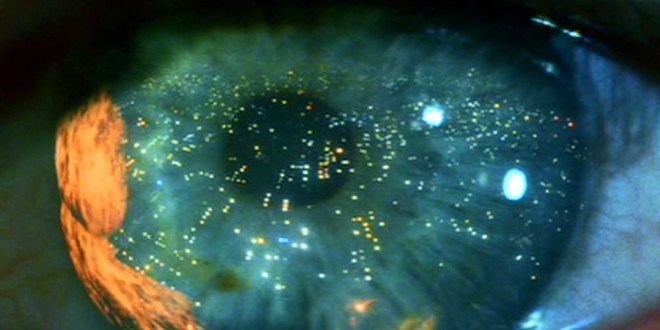
Even as an introduction to these posts, therefore, that’s where I’d love to start– with looking you in the eye, and you looking in mine.
Literally.
(And literarily.)
Because first literally, and at least metaphorically, whether at the deathbed or elsewhere– sharing presence means to look each other in the eye.
***
“Ghosting” by Andrea Cohen
How cavalier
people are—
with language
and with silence.
Any ghost
will tell you—
the last thing
we mean
to do
is leave you.
*
Even specific to this doula training, my own self-conscious questions about quality of presence preceded Henry’s explicit emphasis entirely– going back to my simple, pragmatic choice of whether to take his course online or in person. I do have a young child, and although his mom is warmly supportive of my callings, I still feel responsible to minimise any extended absence. As also a high school teacher, I’ve experienced firsthand many of the pros and cons, especially during the pandemic, of online learning. This was a personal dilemma quite challenging for me: whether to be in the same room– to share eye contact, pheromones, vibes, presence in person– versus the comforts and practicalities, financial and otherwise, of training online from home.
Henry is explicit on his website that his online EOL doula course, something he too first began offering only because of the pandemic, is exactly the same as he shares in person, and that he himself has found it “surprisingly intimate”. But it so happened that his in-person training was being offered precisely during my school district’s Spring Break, and also was being held at Menla Retreat Center in the Catskills, NY. Although I’d never been to Menla itself, I have a very dear friend who lives nearby in Woodstock, someone with whom I became close in India, who later in NYC took me to crash at Robert Thurman’s, a founder of Menla. The unexpected chance all at once to reconnect with her, perhaps with Robert, to meet Henry and take his training in person, seemed strong confirmation of my calling to the death doula work itself. Confirmation, that is, except for the many times greater in-person expense: in time away from my family, in carbon footprint and thousands of dollars, to travel across the continent rather than spend the same number of synchronous hours, on the same content, with the same instructor, online. Even conscious that one motivation was curiosity about what I might learn about him by how he would field my query, I decided to send Henry an email. “I’m a strong believer (as I’ll dare assume you are) in the power of in-person presence,” I wrote. “Without becoming more personal, or indeed asking you to make my decisions for me– have you any added insight or opinion about whether the effort and expense of flying across the continent is ‘worth it’ vs. your online training? Please forgive me for looking for A Sign– but I’d be deeply grateful to hear any angle you might add.”
Henry never replied.
Defining presence as ‘being here now’ includes attention to the crucial immediacy of here– its place; its space. When taking attendance in the classroom, for example, ‘present’, or ‘here’, is exactly the common, formal claim of presence. Not only in weak competition against phones in general, however, but especially following school’s emergent mediation during the pandemic by Zoom, Google Classroom etc, I feel that the quality of in-person presence, and even appreciation of its value, has tangibly suffered for so many of my students. I’ve long speculated that the percentage of those engaged as dependably ‘present’ in classrooms has remained relatively stable not only since I was a kid myself but probably back before Socrates, so this is no simple grumble about ‘kids nowadays’; what I mean is that the others who are physically present– the perhaps similarly steady percentage who are marginalised, traumatised, bored or otherwise disengaged at school– seem harder to connect with than ever. Quality of presence can be blunted and sharpened by so many forces– degree of wakefulness, affect itself, environment itself, etc– and institutional education is guilty of plenty that blunts rather than sharpens presence. Even more broadly, however, even pre-pandemic, social commitment to in-person presence has become drastically displaced by our absorption in mediation– especially by the presence we give to our devices. Author and teacher Steve Edwards, using the same key phrase as Henry, corroborates this observation of Pandemic Effect: “In twenty-five years of teaching, I have come to believe that the quality of my presence—as a witness, a listener, a questioner, a sharer and explorer of experiences—is what makes the most difference to my students. Since the disruption of the pandemic, however, my approach hasn’t really worked.”
In Pt 1, I wondered briefly whether inanimate objects can be said to have presence, using a painting in a gallery as an example; I also claimed that presence can be given– as to a dying person, but also in the widest phenomenological sense, to any intentional object. An athlete, an artist, an artisan, a tradesperson– all give presence to the so-called inanimate objects of their work and play, handling those objects with great skill in the moment– during live performance with a baseball, let’s say, or a violin. But can we also say objects can be imbued with and capture presence? As a way to account for their ‘having’ presence, can presence be marked into the matter of such objects– into that painting on a canvas, say, or words on a page; into a cathedral, its dome, its millwork, etc? This suggestion of presence not only given to but even into objects must thereby apply no less to ‘ready-mades’ as to carefully crafted works of art– to absolutely any object manufactured or manipulated: from a bathroom fixture, to a drawing (whether by Picasso or a child); from a loaf of bread, to its flour; from a car off the assembly line, to the assembly line itself. As I’ve claimed of sentient beings, if the presence of these invested objects can compound– even gathering over time– what of objects more accurately described as animate– like machines, robots, smart devices? The accumulated presence in our phones, for example, might be so concentrated, capturing in each of our hands humanity’s collective and historical investment in text and media; in engineering and design; in plastics, silicon chips, satellites and domestication of electricity– not to mention the manipulative psychology and algorithms that make these devices and their applications purposefully seductive of our presence; their being crucially animate in real time, in the synchronistic immersion of presence by all others invested online at any given, shared moment– in all these ways accounting for their presence being so profoundly, irresistibly attractive. This neo-animist theory of invested presence would also account for its magnetic accumulations harvested and compounded on servers by Google, for example, or in the vast scraping of our traces into alchemically dense concentrations by AI, etc, amounting to incomprehensible stores of presence that are so clearly attractive and compounding of yet more presence– apparently ad infinitum.
Captured presence attracting, accumulating and compounding in this way does very little to suggest a comparatively captivating quality– certainly nothing of comparative quantity– in the barest, simplest presence sentient beings might share in person. A more traditional approach to animism likely eschews such techno- or even anthropo-centric attention to screens altogether, convinced that presence of highest quality depends instead on pure nature, human and otherwise, grounded in embodied, first-hand experience of place and space in the moment; in presence shared with other animals, with the wind or the sea, with a grove of trees or flames of a fire. Even in such immediate and unmediated experience, however, our basic bio-sensory susceptibility as humans to flickering light makes these screens exactly as hypnotic and captivating as the lick of those flames in a fire. As given such emphasis in Pt 2, we humans are so visual. So visual, that is, that we look not only at these screens. Exactly as we do of another’s eyes, we also look into them. Cyberspace upends phenomenological presumptions that emphasise embodied orientation in real time and space, and the presence held by these screens clearly captures a quality high enough that we can barely take our eyes off them.
Phenomenologist and magician David Abram offers so much to any discussion about animism and presence. Conspicuously, his wonderful book The Spell of the Sensuous doesn’t address the effect of screens on presence and its quality (not as does his wonderful Becoming Animal), but it does share a hypothesis profound in its suggestion: far preceding virtuality, mediation’s revolutionary disruption of presence and effect on its quality started long, long ago– with the technology of written language. ‘Simple’ writing upended previous assumptions about quality of presence by first turning language, stories, and meaning away from grounding in a present moment, place, or person. Indeed, we saw in Pt 1 that there appear at least two axes to chart for quality of in-person presence: time, and space. Abram’s suggestion is compelling exactly for what the example of writing spells for such a chart: the breaking of the spell that human presence can only be shared in person. With writing, presence is still shared dependent on our eyes; otherwise, however, it is disembodied– shared instead through these so-called inanimate objects later, at least, and therefore potentially elsewhere, besides.
Just like these ones now, words on a page are intended for those not present to each other– at least not in that shared ‘classroom attendance’ quality of the word. And just like the differences in quality between Henry’s EOL doula course in person or online, there are trade-offs. While the grace of in-person presence between you and me here and now might significantly increase the overall quality of our current presence as shared, its sacrifice at least accommodates a compromised quality of that presence, not only allowing it as possible at all but also offering other astonishing, now entirely integrated and taken-for-granted advantages particular of such latent presence animistically objectified and mediated: first, in the drafting and redrafting available to its creator, crafting and concentrating its presence each time, over time; then, in the potential presence further attracted so much more broadly, from after and elsewhere, shared by others who give it their eyes. Indeed, this ‘compromise’ is true of all recorded presence: writing (whether a novel, letter, email, text, etc), but also any form of recorded audio, sculpture, cave painting, film, video, etc. Then, there are the similar tradeoffs of shared presence which remains synchronous in time but mediated across space: live broadcast, live gaming, Zoom, etc. I’d personally call it always highest quality to be present in person for a concert or playoff game, for example; without that option, I’d rather watch it live on a screen, versus the same screen recorded. “Quality” always means a spectrum, and of course this is no different with presence: one can be in the same room as another, but never share eye contact; one can feel touched to receive a personal Christmas card or DM, or left cold by spam or frozen video.
To many, emphasising the importance of eye contact may seem like emphasising the importance of breathing. Reflections on presence shared through its mediation– through everyday media, so entirely integrated and barely resistible in our 21st-century reality– may appear similarly obvious, even hypocritical, since not only has this straw horse long left the barn, but as far as media goes, I’ve gulped the Kool Aid myself as hard as anyone. I passionately love words, books, movies. I love the connections available through mediation, as evident in my current digital appearance to you now. Likewise, taking one of the incredible opportunities for world-class training now available on a screen from the comfort of home, I chose to take Henry’s end-of-life doula course online.
Had Henry replied to my message– had he given me even the weakest, email-bound quality of presence– would I perhaps have gone to NY, to visit my friend and take Henry’s training in person? Especially following these reflections, largely based on Henry’s own emphasis on presence, the less I might ever begrudge him his failing to respond to emails regardless. By prioritising the quality of immediate, in-person presence, Henry’s overall strength of presence is exactly what drew me to him in the first place. This commitment was confirmed entirely in the way he facilitated the group: the tone he set and space he gave; the stories he told and experience he shared. Not at all lost on me, especially as a teacher myself, were Henry’s strict online rules: fully synchronous, with no cameras off. Ideally, no mics off. No eating. Such expectations may seem restrictive to the free choice of paying customers, but this commitment proved his pedagogical practice as preached most of all: especially online, where in-person presence has already been compromised, a commitment to undivided presence within those qualitative limits was expected by all.
During the worst of Covid’s isolation, who among us wasn’t desperately grateful for the mercy of such mediation? But especially in recovery from the pandemic’s tandem push, away from in person contact and onto online, mediation deserves questioning as our powerfully common, often even primary form of sharing presence. Whether social media, FaceTime, email or text, any gesture of reaching out remains legitimate sharing– as potentially earnest and authentic as any human connection can be. But we also must recognise the change in quality suggested by mere metaphors like ‘gesture’ and ‘reaching’. If James Laing insists that even eye contact is merely metaphoric, for example, what of the ‘contacts’ on one’s phone? We return through these words to territory literally tactile– into the grounding touchstone of touch, including eye contact. These are the only connections to others that are entirely unmediated– neither by digitisation nor even language, story, metaphor— and therefore truly independent. This is presence of the highest quality, exactly because it is both immediate and unmediated. All else is proxy for proximity– rich and powerful, certainly, but also mere metaphor for the literal grounding of presence in person.
If my son is clambering for my attention in person while I am talking to his grandma via FaceTime, in what senses is she as legitimately, qualitatively present as he is? What are the ethical tradeoffs for a student in class choosing to be present to a meme on their phone rather than to anyone in person around them? Looking is like breathing– elemental, intuitive, embodied. But as might be asked about the quality of air one breathes, what is the quality of where one’s eyes touch most? When I look into the eyes of my son and those students, in-person presence– touch, pheromones, collective chemistry, eye contact with one another– deserves obvious emphasis as the grounding irl social experience to inform all others. As has the classroom, a contemporary deathbed scene has become difficult to imagine without attachment to devices: compelled by end-of-life’s unique existential urgency, a re-connection with physically distant loved ones via video call, for example, even a miraculous, otherwise impossible chance for last-minute reconciliation. Much more broadly, however, in either creation or consumption– when does our mediation improve our quality of presence, and when does it dull, distract, divide it?
Henry discouraged “worry about doing something specific”. As it turns out, however– despite being delicate, subtle, silent; despite seeming less and less deliberate, practised or valued among us– “bringing our highest quality of presence” is plenty specific enough. As touchstone for all communication and connection, we embodied, biological beings require the grounding of in-person contact, including eye contact. A self-aware sentient being should foster such intentional presence with others as a social responsibility, an ecological responsibility, an outright ethical obligation. To combat epidemic loneliness and stay ‘in touch’ with what makes us social and alive, eye contact needs intentionality. Can one practise with intention the number of eyes one meets per day– with those closest, certainly, but perhaps especially with strangers? Because unless shared human presence is so grounded in touch and eye contact, entirely independent and thereby free not only from datafication but even from the beautiful, entangling truth in words, then that purely sentient quality of presence in common, that literal ground beneath us, will continue to erode, leaving a disembodied intelligence– all equally artificial.
As suggested of “ghosting” in the opening poem, ‘to give up the ghost’ seems all wrong, since it’s the matter, the mediation, the metaphors that are left behind– not the ghost. Or perhaps this cliché’s wisdom is that the ghost is not in the machine. To mix more metaphors, perhaps it is the machine– mediation our ghostly presence; our idols of legacy; our clinging, compounded hope that we can haunt beyond our own bodies forever.
Sharing grounded presence, especially in person– being able to look someone in the eye– proves so fundamental that without it, we have lost independence, lost consciousness, lost control of ourselves. However that quality of presence dwindles, its weakness leaves us naturally more and more dependent on the presence given us by others: by family, friends, nurses, doulas– even by our devices. In any case, embodied presence is the last that one holds onto ever. Thereby the last that one lets go of, too. Regardless of presence in person versus mere mediation, this last loss of control is of course its ultimate context: our most personal loss of presence. Our inescapable, once-in-a-lifetime experience of passage– our own death. Our moving from presence into apparent absence.
And how would one wish to die?
Some imagine it best to suffer one’s own death unexpectedly and instantaneously, like the flip of a switch– an Acme anvil on the head, or smuck by a bus; others, that it be blissfully ignorant of awareness itself– dying in one’s sleep, or opiated to oblivion. Whether any of us enjoy the slightest control in our last moments, whether despite our best avoidance– death’s compelling invitation ‘requests our presence’ regardless. No matter the quality of presence among those around me, I’ll therefore call it here and now my own last will and testament: to die intentionally present. To die in person.
To die in highest quality of presence.
To Max and Kathryn, whose presence I’ll always seek most.
To Henry, whom I hope to meet in person.
To Rachel. May these words serve as my ghostly presence until again, someday soon, sharing eye contact.
 THE REVOLOCUTIONARY PATHETIC MOVEMENT